Working in French hospitality
Job offers, one at a time. No account needed.
Chef, chef de partie, waiter, pastry chef: France constantly seeks talent for its kitchens and dining rooms.
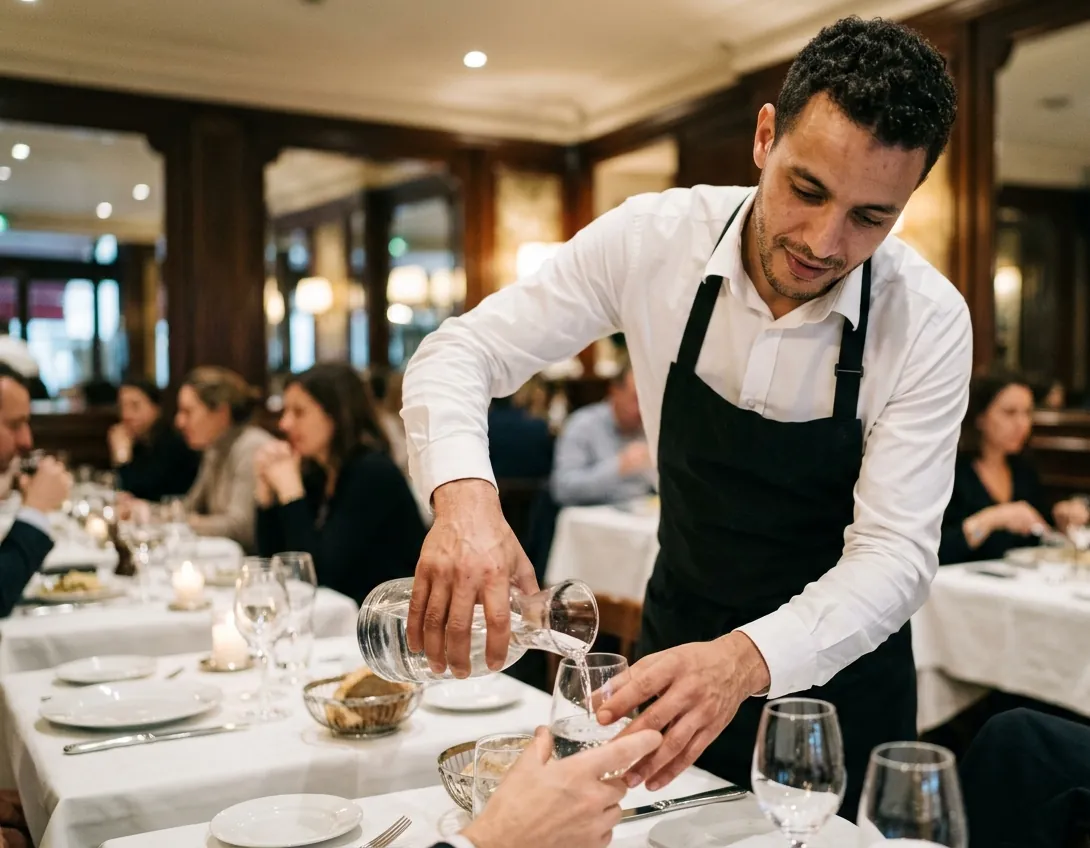
Hotels, fine dining, brasseries, collective catering, pastry: the French hospitality sector employs over 1.2 million people and remains one of the most accessible industries for foreign candidates. Chefs, chefs de partie, commis, waiters, sommeliers, pastry chefs — every summer season and year-round, verified establishments seek trained, motivated profiles, on seasonal contracts (max 6 months — CESEDA Art. L421-34) or on permanent CDI. The sector is officially listed as in tension in several regions (PACA, Occitanie, Île-de-France, the Alps), making work permits easier to obtain. On ObjectiFrance, your file is built to French standards and presented directly to verified restaurateurs and hoteliers — no middleman, no upfront fees.
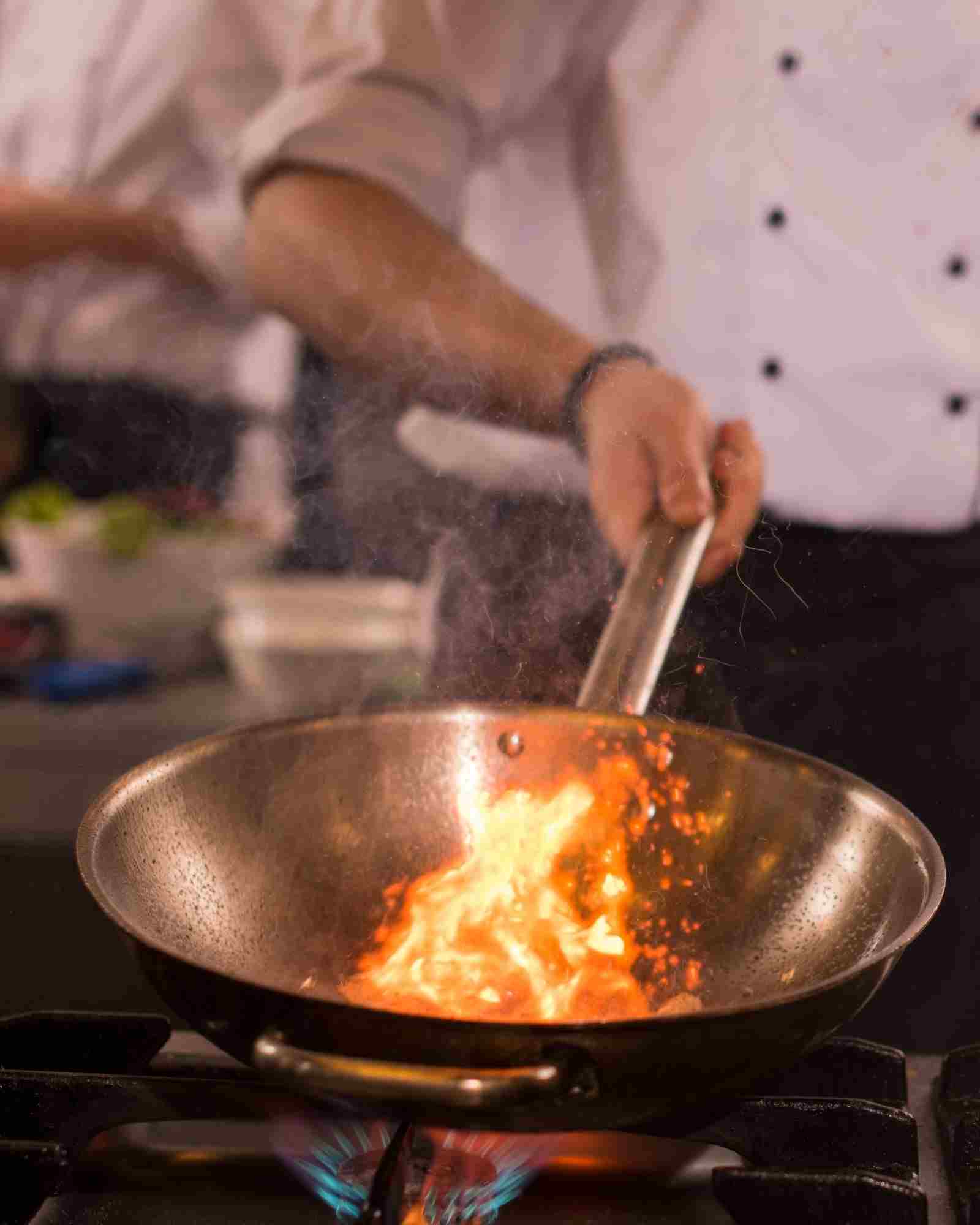


Six hospitality roles open to international workers.
According to UMIH (Hotel and Restaurant Industry Union), more than 200,000 jobs remain unfilled every year. Below are the most sought-after profiles in 2026.
№ 01
Cook
€1,900 – €2,600Permanent / seasonalPreparing dishes solo or in a brigade. CAP Cuisine or documented experience. Listed as a high-demand occupation.
Voir les offres№ 02
Chef de partie
€2,300 – €2,900PermanentRunning a kitchen station (hot, cold, garde-manger, pastry). Step toward sous-chef and head chef. 3 to 5 years' experience required.
Voir les offres№ 03
Commis chef
€1,867 – €2,100Seasonal / permanentEntry-level kitchen role. Learning the techniques, supporting chefs de partie. Ideal for motivated candidates without a diploma.
Voir les offres№ 04
Waiter
€1,867 – €2,200Permanent / seasonalFloor service, order-taking, payment. Tips often substantial. A2 French recommended for upper-tier hotels.
Voir les offres№ 05
Pastry chef
€2,000 – €2,600PermanentProducing desserts, viennoiseries, entremets. Recognized art-craft trade. CAP Pâtissier or proven experience usually required.
Voir les offres№ 06
Head chef
€2,800 – €4,200PermanentRunning the brigade, designing menus, food-cost management. Confirmed experience (10+ years) and leadership required.
Voir les offres
Three reasons to join French hospitality.
— I
Historic staffing shortage
The HCR sector (hotels-cafés-restaurants) seeks more than 200,000 people every year. Several roles — cook, chef de partie, commis, waiter — are on the shortage-occupation lists of many regions (order of 21 May 2025).
— II
Protective HCR agreement
Collective agreement HCR (IDCC 1979) guarantees minimum wages by tier, split-shift bonuses, meals provided, mutual insurance. Your rights are identical to those of a French employee.
— III
Seasonal or long-term career
Summer seasonals (PACA, Alps), winter seasonals (resorts), or permanent contract in a fine-dining brigade — your call. A successful season often opens the door to a permanent contract.
Your steps, with the law to back them up.
Hospitality hires seasonally or on permanent contracts. Below are the texts your ObjectiFrance advisor applies step by step.
- — CESEDA Art. L421-34
Seasonal worker
Seasonal contract limited to 6 months over 12 consecutive, renewable each year. Ideal for summer seasons (Riviera) and winter seasons (Alps).
- — Labour Code Art. R5221-21
High-demand occupations
Cook, commis and waiter appear on the shortage-occupation lists of many regions (order of 21 May 2025). DREETS issues the work permit without checking the local labour-market situation.
- — HCR Agreement — IDCC 1979
Hotels, cafés, restaurants
Minimum wages by tier, working hours, meals provided or allowance, split-shift and continuous-service bonuses. Mutual insurance mandatory and employer-funded.
- — CESEDA Art. L421-1
Salaried permit
For a permanent contract, 1-year Salaried permit renewable. After 4 years: 4-year multi-year permit. After 5 years: 10-year resident card.
How much do you earn in French hospitality?
Indicative gross monthly figures in euros, excluding tips (often substantial in floor service) and benefits in kind (meals, sometimes housing). 2026 SMIC (since 1 June): €1,867.02 gross.
| Role | Minimum | Maximum |
|---|---|---|
| Commis chef | €1,867 | €2,100 |
| Cook | €1,900 | €2,600 |
| Chef de partie | €2,300 | €2,900 |
| Waiter | €1,867 | €2,200 |
| Pastry chef | €2,000 | €2,600 |
| Head chef | €2,800 | €4,200 |
— Source: 2026 collective wage scales — HCR Agreement IDCC 1979 / UMIH / DARES. Tips in floor service can add €200 to €500 net/month depending on the venue.
Where the demand is highest.
French hospitality hires year-round in cities and massively on a seasonal basis in tourist areas.
French Riviera & PACA
— Summer, gastronomy, luxury hotels
Cannes, Saint-Tropez, Monaco: palace hotels, Michelin-starred restaurants, beach clubs. Season May to October, salaries topped up in peak weeks.
Alps & ski resorts
— Winter, mountain hospitality
Courchevel, Val d'Isère, Méribel, Chamonix: season December to April. Housing usually provided, international atmosphere, generous tips.
Île-de-France
— Michelin-starred dining, brasseries
Paris hosts 31 three-star Michelin restaurants and hundreds of historic brasseries. Path to a fine-dining brigade career open.
Brittany & Atlantic
— Summer, seafood, crêperies
Saint-Malo, La Rochelle, Arcachon: dense summer season. Seafood and maritime cuisine specialties. Strong demand for cooks.
Occitanie & South-West
— Toulouse, Bordeaux, Basque Country
Renowned regional cuisine. Bordeaux and Biarritz attract international clients year-round. Mixed seasonal + permanent careers.
French Overseas
— Réunion, French West Indies
Year-round seaside hospitality. Saint-Barthélemy, Saint-Martin, Réunion: seasonal and permanent opportunities for cooks and waiters.
Three steps to your hospitality contract.
- 01
Build your candidate file
Trade, qualifications (CAP/BEP, specific training), experience, languages, contract type (seasonal or permanent). Upload certificates and payslips.
- 02
Get visible to venues
Your profile is presented to restaurants and hotels verified through the Recherche Entreprises API. From 5-star palace to neighborhood brasserie — your project drives the match.
- 03
Prepare your arrival
Work permit, visa, OFII, social security, bank account. For seasonals, housing usually provided by the employer from day one.
Applying from the Maghreb?
Consular procedures, work authorisation and qualification recognition vary by country of origin. Check the dedicated guide for your nationality and the official channels (OFII, ANAPEC/ANEM/ANETI, France-Visas).
— By country of origin
— Process & support
Everything you need to know before leaving.
Do I need a French diploma to work as a cook?
No. A foreign CAP Cuisine or documented experience (3 to 5 years in an equivalent restaurant) suffices for most roles. Apprenticeship-style positions (commis) are open to motivated candidates without a diploma.
What is the minimum salary for a seasonal hospitality worker?
The 2026 monthly gross SMIC (€1,867.02 since 1 June) is the absolute floor. The HCR agreement sets minimums by tier: an entry commis at €1,867, a qualified cook at €1,900 minimum, a chef de partie at €2,300. Meals and sometimes housing on top.
Is housing provided during the season?
Very often, especially in ski and seaside resorts. Employer housing is specified in the contract — cottage, studio, shared dorm. Minimum standards are set by decree. Otherwise the employer pays a housing allowance.
Are tips legally mine?
In France, tips (cash or added on card) belong to the employee who receives them, or are pooled per house rules. Service is included in the bill (15%) — tips are therefore a bonus, often substantial in quality floor service.
Can I move from a seasonal contract to a permanent one with the same restaurant?
Yes, this is a frequent path. After 1 or 2 successful seasons, the employer can offer a permanent contract — Salaried work permit application, status change at the consulate or prefecture. ObjectiFrance supports this transition.
Which regions hire the most seasonal workers?
French Riviera and PACA (May-October summer), Alps (December-April winter), Brittany and Atlantic (summer), spa towns (Vichy, Aix-les-Bains). Île-de-France and major cities hire on permanent contracts year-round.
Do I need to speak French to work in a kitchen?
In the kitchen, A2 is enough to understand instructions and the French dish nomenclature. In service, B1 minimum is expected to interact with guests. Upper-tier hotels often require English on top.
How long do administrative procedures take?
For a seasonal high-demand role, expect 4 to 8 weeks between signing and arrival. For a permanent contract, 6 to 10 weeks. ObjectiFrance centralizes the steps: DREETS work permit, visa, OFII, social security, bank, mutual.
Are there any fees to pay to ObjectiFrance?
Applying is free and unlimited for every candidate. If you want an advisor to prepare your file and send your applications with you, France ★ costs €89 (6 months), or France ★★ at €490 with your arrival in France (12 months), with a 30-day money-back guarantee. Nobody should sell you a contract or a job in a kitchen or dining room: anyone asking you for an upfront payment in our name is a scammer — report them to us.
What if the venue does not respect my conditions?
Any dispute should be reported to the labour inspectorate (DREETS) and to your ObjectiFrance advisor. Venues signed via ObjectiFrance are monitored. Serious breaches: removal from our pool and reporting to the relevant authorities.
Land a job in French hospitality.
An email to start. A guided file. A team by your side. Never alone in front of paperwork again.
— 100% free to apply
You are abroad: our team in France finds employers, calls them and submits your applications for you within 72 h.Discover France ★